

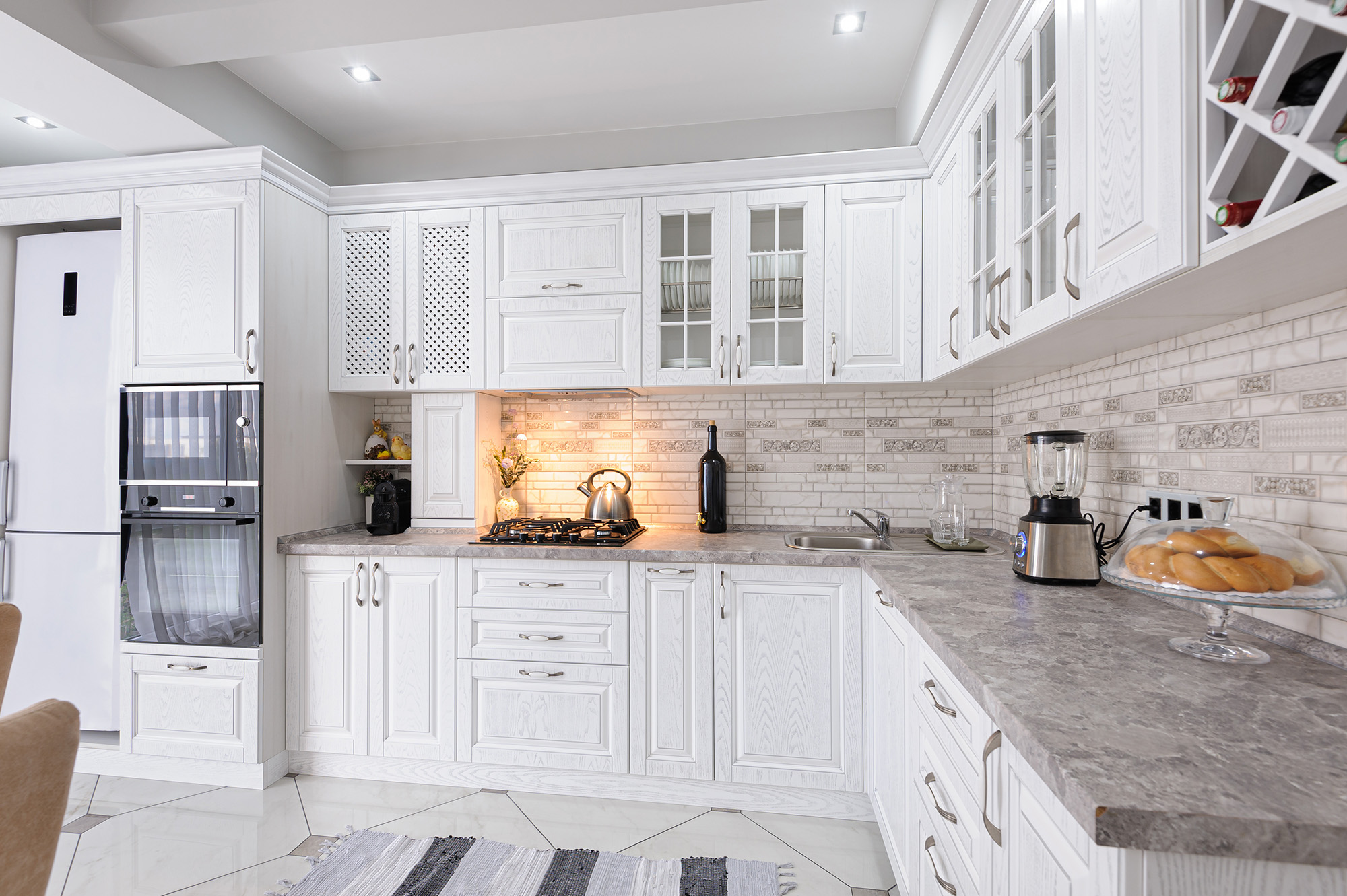
Quick Guide to Matching Countertops & Floors
Identify undertones first: Determine whether your hardwood or Luxury Vinyl Plank (LVP) flooring carries warm (yellow, red, orange) or cool (gray, ash, taupe) undertones, then choose a countertop that shares or complements that thermal quality.
Balance pattern density: Pair heavy visual graining or wide variation in LVP and hardwood with subtle, low-movement stone (like solid quartz or fine-grained granite). If your floors feature clean, uniform lines, feel free to choose bold, heavily veined countertops.
Use cabinets as the bridge: Treat cabinetry as the visual transition between your horizontal floor plane and vertical countertop surfaces to prevent clashing shades.
Test samples in your home light: Observe wood plank and stone samples under Northern Colorado’s unique natural sunlight at different times of day before making your final selection.
Designing a kitchen requires balancing multiple large surfaces. When updating your kitchen, your countertops and floors make up the largest horizontal surface areas in the space. Pairing hardwood or Luxury Vinyl Plank (LVP) flooring with stone or quartz countertops creates a cohesive look that anchors your entire home.
Whether you are renovating an historic bungalow, updating a suburban kitchen, or building a mountain getaway, aligning floor planks with countertop slabs requires an understanding of color undertones, grain movement, and contrast.
1. Identify Your Flooring’s Undertone
Before browsing countertop slabs or quartz samples, take a close look at your flooring in natural daylight. Wood planks—whether natural hardwood or high-definition LVP—are rarely a single flat color. They contain undertones that dictate which countertop materials will harmonize with them.
Warm Undertones
Floors with yellow, red, orange, or rich honey hues demand countertops that respect that warmth.
Best Matches: Off-white or warm creamy quartz, Calacatta Gold marble with warm veining, or warm earth-toned granites.
What to Avoid: Stark blue-gray countertops, which can cause warm wood tones to look artificially orange or muddy.
Cool Undertones
Ashed oak, gray-stained hardwoods, and cool-toned LVP feature charcoal, blue, or silver undertones.
Best Matches: Pure white quartz, crisp Carrara marble, slate gray soapstone, or honed dark granite.
What to Avoid: Deep yellow or creamy countertops, which often look dingy next to cool gray floors.
Neutral Undertones
Natural white oak and soft taupe LVP offer maximum versatility, balancing subtle warm and cool elements.
Best Matches: Almost any slab, from dramatic black soapstone to soft quartzite like Taj Mahal.
2. Balance Movement and Visual Texture
A common mistake in kitchen design is mixing too many competing patterns. Both wood floors and stone countertops feature unique movement, graining, and character marks.
When Your Floors Have High Movement: If you select hand-scraped hardwood, character-grade hickory with distinct knots, or multi-toned LVP planks, choose a low-movement countertop. Solid or soft-veined quartz provides a clean visual resting spot that lets your floors shine.
When Your Floors Have Low Movement: Select-grade white oak, fine-grain maple, or smooth, monochromatic LVP allow you to introduce drama on your vertical surfaces. Pair these sleek floors with heavily veined Calacatta quartz, swirling quartzite, or speckled granite.
3. High Contrast vs. Monochromatic Palette
You can choose between creating strong contrast or building a tone-on-tone palette. Both approaches offer distinct design benefits.
The High-Contrast Look
Pairing dark hardwood or rich espresso LVP with bright white quartz countertops creates an energetic, modern space. Conversely, light natural oak floors paired with dark soapstone or matte black granite yield an elegant, grounded atmosphere.
Design Tip: When using high-contrast elements, ensure your light fixtures or backsplash contain subtle accents of both light and dark tones to pull the room together.
The Monochromatic / Layered Look
If you prefer a seamless, calming design, layer similar tones throughout the room. For example, pair blonde white oak floors with soft taupe countertops and off-white cabinetry.
Design Tip: To keep a monochromatic palette from looking flat, introduce varying textures—such as a matte floor finish paired with a polished countertop, or a wire-brushed plank paired with honed stone.
4. Using Cabinets as a Design Bridge
Countertops and floors rarely sit directly against one another; your kitchen cabinets sit between them. Cabinets act as a visual transition, preventing similar wood tones from clashing.
Wood Floors + Wood Cabinets: If you choose wood-look LVP or natural hardwood alongside stained wood cabinets, select a solid-colored stone countertop (such as white or dark gray) to break up the wood grain.
Wood Floors + Painted Cabinets: White, navy, olive, or soft gray cabinets give you greater flexibility to experiment with distinct countertop patterns and floor pairings.
Bring Your Kitchen Vision to Life
Selecting the ideal floor and countertop pairing is much easier when you can review physical materials under accurate lighting. At Peak Flooring, we help you navigate wood species, LVP wear layers, stain colors, and surface combinations to build a kitchen that fits your lifestyle.
Whether you live in the heart of Loveland, Fort Collins, Berthoud, Campion, Mead, Johnstown, or Windsor, our local showroom teams are ready to walk you through your choices. If you are updating a home or cabin near Estes Park, Allenspark, Pinewood Springs, Glenhaven, Drake, or Lyons, we offer resilient hardwood and waterproof LVP options built for mountain living. For projects across Longmont, Niwot, Gunbarrel, Boulder, Erie, Firestone, Dacono, Platteville, Hygiene, Louisville, and Lafayette, our installation experts deliver precise craftsmanship from measurement to final trim.
Ready to start your kitchen transformation? Visit Peak Flooring to schedule your free design consultation, explore our showroom samples, or request an in-home estimate today!


