

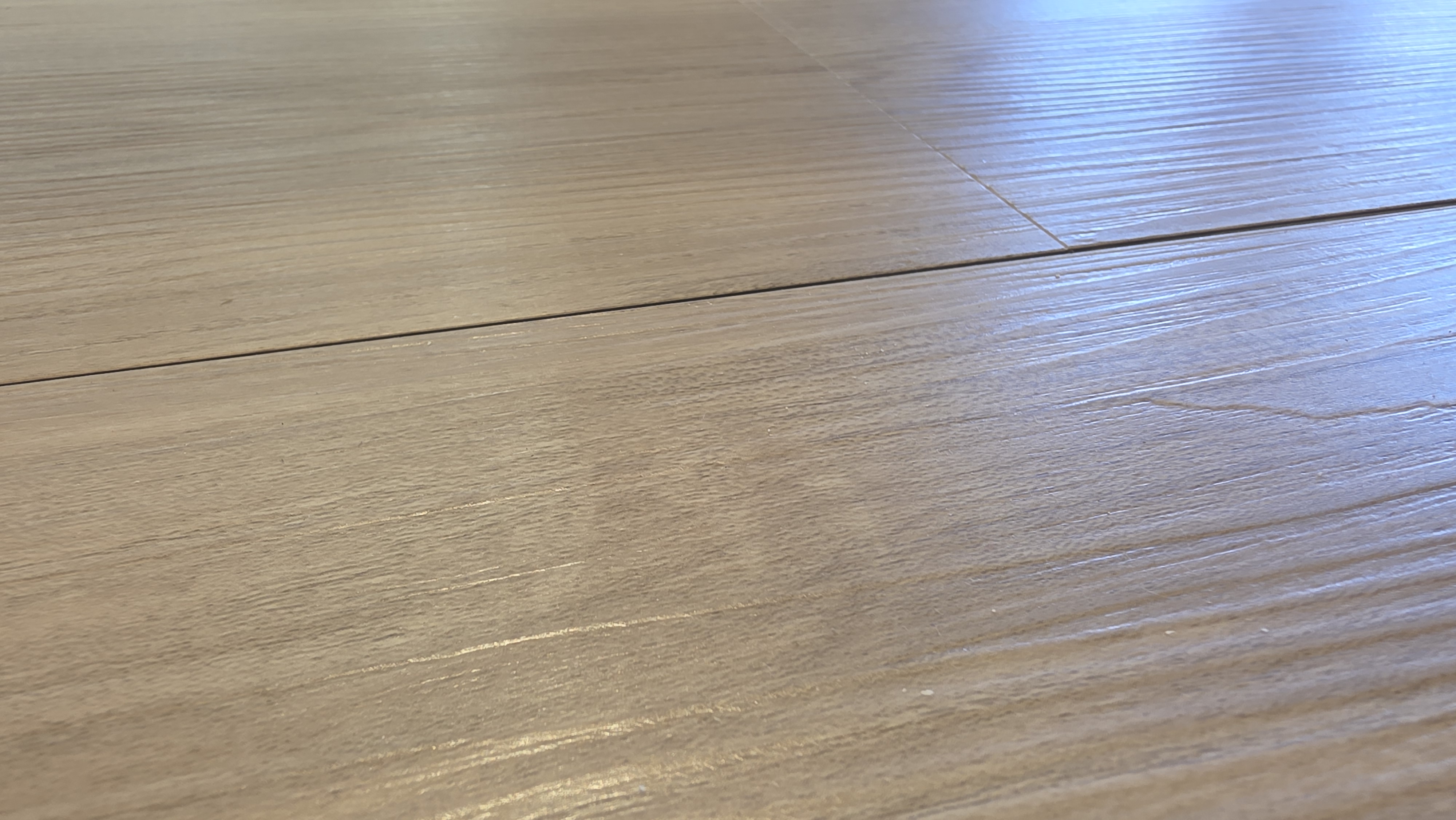
1. Should There Be Gaps Between LVP Planks?
No. There should not be visible gaps between properly installed LVP planks. The planks should fit tightly together at the seams and the locking system should be fully engaged.
Walk around the room and look closely at the joints between planks. You shouldn't see open spaces or seams that are separating.
Why Are There Gaps Between My LVP Planks?
Gaps between LVP planks can have several causes, including improper installation, an improperly engaged locking system, movement of the flooring, or problems with the product or subfloor.
A small gap that appears after installation is worth having your flooring installer inspect, particularly if it continues to grow or occurs in multiple areas.
Bottom line: visible gaps between LVP planks are not what you should expect from a properly installed floor.
2. Should LVP Flooring Be Completely Flat?
Yes. Properly installed LVP should form a continuous, flush surface. Individual planks should not noticeably stick up higher or sit lower than the planks surrounding them.
Look across the floor from a low angle and walk over the seams. You should not be able to see or feel significant differences in height between adjacent planks.
If one plank is noticeably higher than another, it could indicate an issue with the locking system, the flooring itself, or the surface underneath.
Should LVP Feel Uneven?
LVP should not feel noticeably uneven from one plank to the next. Minor variations can occur depending on the product, but a properly installed floor should generally feel like one continuous surface.
If you can feel individual plank edges when walking barefoot or see obvious height differences between planks, have the installation inspected.
3. Should There Be a Gap Between LVP and the Wall?
Yes. Floating LVP flooring should typically have an expansion gap between the flooring and the wall.
A common expansion gap is approximately 1/4 inch, but you should always follow the flooring manufacturer's installation instructions.
This gap is called an expansion gap or perimeter expansion gap.
LVP can expand and contract as temperature and environmental conditions change. The expansion gap provides room for the flooring to move without pressing against the walls.
How Do I Check the Expansion Gap?
The easiest time to check is before the baseboards or shoe molding are reinstalled. Look around the perimeter of the room and make sure there is space between the edge of the LVP and the wall.
Once the baseboards are installed, they should cover this gap.
Important: Not every LVP product has exactly the same installation requirements. Always follow the manufacturer's instructions for the specific flooring you're installing.
4. Should LVP Move When You Walk on It?
LVP should not have isolated areas that noticeably move, dip, or flex when you walk across them. If a particular plank or section of flooring moves every time you step on it, the subfloor may not have been properly prepared.
This is especially important with floating LVP.
Why Does My LVP Move When I Step on It?
One possible cause is an improperly prepared subfloor.
Before LVP is installed, the subfloor needs to meet the flooring manufacturer's requirements for flatness and condition. If there are significant low spots, high spots, or other irregularities underneath the flooring, the LVP may flex or move when weight is applied. A general LVP subfloor preparation rule of thumb is that within a 6’ span, the subfloor should not vary in height more than ⅛”.
Walk slowly across the entire room and pay attention to how the floor feels.
A properly prepared floor should feel solid and consistent underfoot.
If you find one particular area that moves noticeably, it's worth having the installer inspect it.
5. Should LVP Be Glued Under a Dishwasher, Washing Machine, or Dryer?
In many installations, LVP underneath a dishwasher, washing machine, or dryer should be glued down rather than installed as a floating floor. However, the correct method depends on the specific flooring product and the manufacturer's installation instructions.
Why Does LVP Under Appliances Need Special Attention?
Dishwashers, washing machines, and dryers can vibrate and move significantly while operating.
If a heavy appliance vibrates or moves on top of a floating LVP floor, that movement can transfer into the flooring. Repeated vibration can cause floating planks to move, shift, or buckle.
Over time, this movement can contribute to flooring failure.
For this reason, the flooring installation underneath or around heavy vibrating appliances needs to follow the manufacturer's requirements. In applications where adhesive is required, gluing the flooring down can help prevent the planks from moving with the appliance.
If your LVP is installed underneath a dishwasher, washing machine, or dryer, check the manufacturer's installation instructions to determine whether the flooring should be glued down.
6. How Should LVP Planks Be Staggered?
LVP planks should generally be installed in a natural, random-looking staggered pattern. You should not see an obvious repeating pattern across the floor.
A properly installed LVP floor should avoid patterns such as:
Stair stepping
Half-offset patterns
1/3-offset patterns
Brick patterns
Repeating seam patterns
Planks stacked directly above one another
Straight-set grid patterns
Is a Brick Pattern Okay for LVP?
No, a brick-style repeating pattern is not appropriate for LVP installation.
These types of repeating patterns are commonly associated with tile installations, but LVP is designed to replicate the appearance of wood flooring. Wood floors don't naturally have perfectly repeating seams.
LVP manufacturers also commonly specify minimum stagger and seam-spacing requirements. Your installer should follow the requirements for the specific product being installed.
Oftentimes, installing LVP in a brick-set pattern or a straight-set can void the manufacture warranty. This is because these patterns put unnecessary pressure on the plank joints, which can lead to the locking mechanisms failing.
What Is the Best Pattern for LVP Flooring?
The best LVP installation typically has a natural, random-looking stagger that follows the manufacturer's minimum seam-spacing requirements.
The goal isn't simply to make the seams look random. The installation must also meet the technical requirements specified by the flooring manufacturer.
7. Should LVP Planks Be Randomly Mixed?
Installers should pick and choose planks one at a time while installing to ensure a random look.
LVP planks should generally be distributed throughout the room so that different colors, patterns, and plank designs are naturally mixed together.
In one box, an LVP style might come with 10 unique plank designs, for example.
A good LVP installer will organize the planks into piles organized by what pattern they have, and pull planks one at a time while installing, to personally ensure that two same planks aren't placed next to each other and that the design looks as random as possible.
Many LVP products contain multiple plank designs intended to mimic the variation found in real hardwood.
Before accepting an installation, stand back and look at the entire floor.
Ask yourself:
Are two identical-looking planks directly next to each other?
Is one part of the room noticeably darker than another?
Is one area mostly light-colored planks?
Can you easily identify the same distinctive plank repeating nearby?
Does the floor look like a natural mixture of different plank designs
Should Two Identical LVP Planks Be Next to Each Other?
No, obviously identical-looking planks should not be placed directly beside one another when the product contains multiple plank designs.
The installer should mix the available plank designs throughout the room to create a natural appearance.
Of course, the exact amount of variation depends on the flooring product. Some products have more visual variation than others.
8. Why Does My Wall Need Touch-Up Paint After LVP Installation?
A paint touch-up after LVP installation can be completely normal, particularly if the new flooring is thinner than the old flooring and the baseboards need to be moved downward.
Here's what can happen:
The new flooring may have a different overall thickness than the flooring it replaces. If the new LVP is thinner, the baseboards may need to be shifted downward so they properly cover the edge of the new floor.
Moving the baseboard can expose a small strip of wall that was previously covered.
That can leave a visible line of unpainted wall.
Is It Normal to Have a Paint Line After New Flooring Is Installed?
Yes. A small unpainted line along the bottom of the wall can occur when baseboards are repositioned during a flooring installation.
This isn't necessarily a sign that the installer damaged the wall.
If you're having new flooring installed, it's a good idea to ask your flooring contractor whether the baseboards will need to be moved and whether wall touch-up will be necessary.
Checklist: How Can I Tell If My LVP Installation Has a Problem?
A quick inspection should include these questions:
Are there gaps between the planks?
There shouldn't be visible gaps.
Are all the planks flush?
No plank should noticeably stick up higher than its neighbors.
Does the floor move when you walk on it?
The floor should feel solid and consistent.
Is there an expansion gap around the walls?
Floating LVP generally needs perimeter clearance.
Is the LVP underneath appliances installed correctly?
Check the manufacturer's requirements for appliances that vibrate or move.
Does the plank pattern look random?
Avoid obvious stair-step, brick, or grid patterns.
Are identical planks sitting next to one another?
The different plank designs should generally be distributed throughout the room.
Does one section of the room look dramatically darker or lighter?
The installer should generally distribute the available plank colors and designs throughout the installation.
LVP Installation Problems: When Should You Call Your Installer?
If you find something that doesn't look right, contact your flooring installer and ask them to inspect it before attempting to fix it yourself.
A gap, moving plank, uneven area, or unusual pattern doesn't necessarily mean that the entire floor needs to be replaced. The cause needs to be identified before determining the appropriate solution.
It's also important to remember that the manufacturer's installation instructions are the final authority for product-specific requirements. Different LVP products can have different requirements for expansion gaps, subfloor flatness, seam staggering, adhesives, and installation methods.
If you're concerned about an installation, take photos or videos of the problem area and have your flooring professional evaluate it.
LVP Installation FAQ
How much gap should LVP have from the wall?
A common expansion gap for LVP is approximately 1/4 inch, but the required clearance varies by product. Always follow the manufacturer's installation instructions.
Should LVP have gaps between planks?
No. Properly installed LVP should have tight seams without visible gaps between the planks.
Should LVP flooring move when you walk on it?
A properly installed LVP floor should not have isolated areas that noticeably move, dip, or flex when you walk on them. Movement can indicate an issue with the subfloor or installation.
Can LVP be installed under a washing machine?
Yes, but the installation needs to follow the flooring manufacturer's requirements. Because washing machines can vibrate and move significantly, some LVP installations require the flooring underneath the appliance to be glued down.
Can LVP be installed under a dishwasher?
Yes, but check the manufacturer's installation instructions. Dishwashers can move or vibrate, and a floating floor underneath the appliance can potentially shift or buckle if the installation isn't designed for that application.
Should LVP planks be staggered?
Yes. LVP should generally have a natural, random-looking stagger that meets the manufacturer's minimum seam-spacing requirements.
Can you install LVP in a brick pattern?
A repeating brick pattern is not appropriate for LVP. LVP should typically use a natural stagger rather than a repetitive tile-style pattern.
Why is my LVP floor buckling?
LVP can buckle for several reasons, including inadequate expansion space, improper installation, excessive movement, or other installation or environmental issues. If your floor is buckling, have the flooring installer inspect it to determine the cause.
Why is my LVP floor uneven?
An uneven LVP floor can be caused by an improperly prepared subfloor, an issue with the locking system, damaged flooring, or another installation problem. The installer should determine the cause before attempting a repair.
Should I see a gap around the edge of my LVP?
Yes. Floating LVP generally requires an expansion gap around the perimeter of the room. The baseboard or shoe molding should cover the gap after installation.
Need Help With LVP Installation in Northern Colorado?
Choosing the right LVP is only part of getting a great floor. Proper subfloor preparation and professional installation are essential to getting the performance and appearance you expect from your flooring.
Peak Flooring helps homeowners throughout Northern Colorado with flooring selection, LVP installation, and other flooring services. If you're considering luxury vinyl plank for your home or you're concerned about an existing LVP installation, our flooring professionals can help you understand what you're seeing and what your options are.
Have questions about LVP flooring or installation in Northern Colorado? Contact Peak Flooring to speak with a local flooring professional.


