

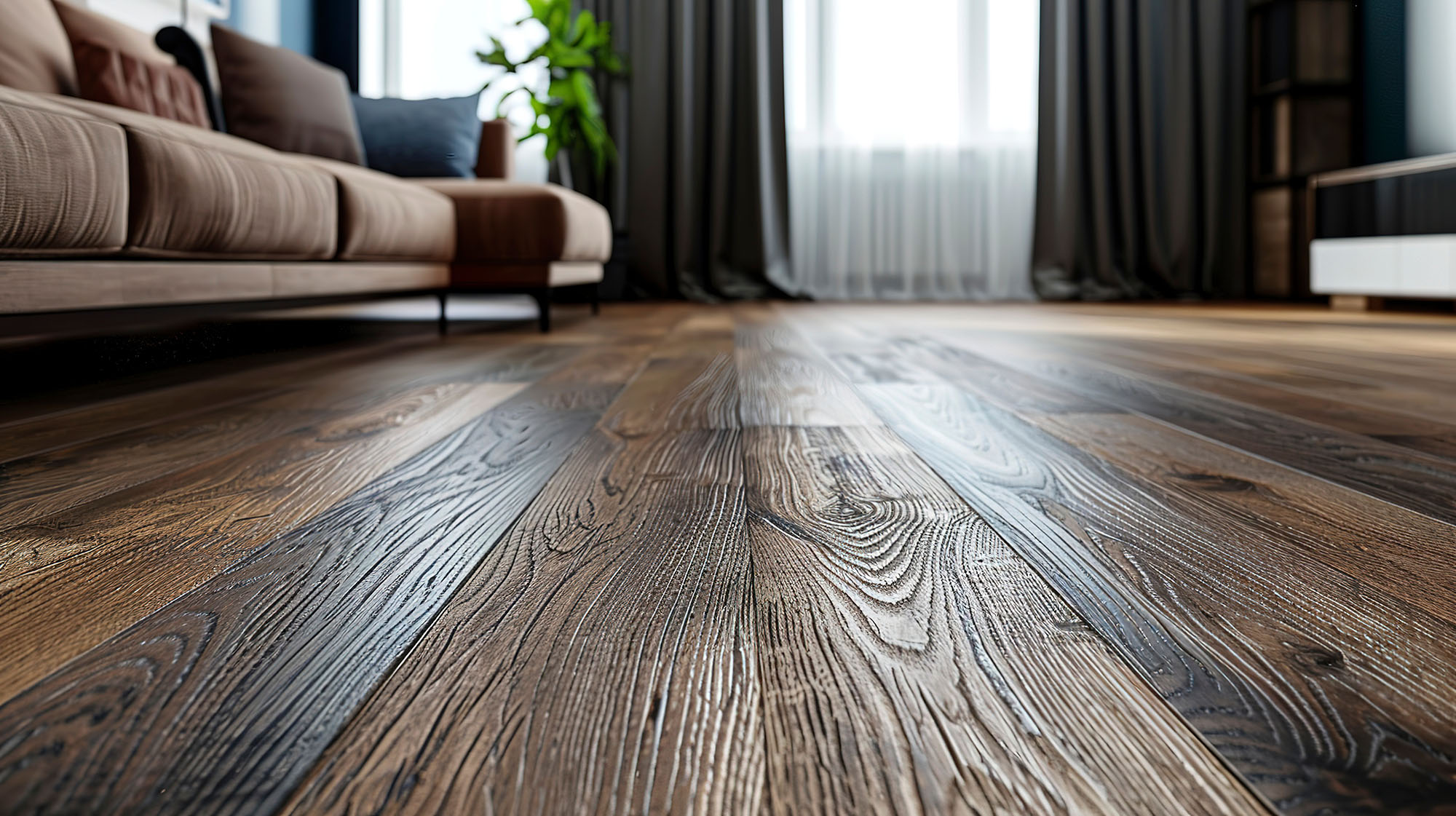
Realism in Modern LVP Flooring
High-definition print layers: Advanced photographic technology replicates the subtle grain patterns, organic color variations, and natural knot details of real wood species with astonishing accuracy.
Embossed In Register (EIR): This manufacturing process aligns the physical surface texture directly with the underlying printed wood grain, allowing you to feel every knot, cathedral, and grain line exactly where you see it.
Beveled edge profiles: Micro-beveled, painted, or pressed edges separate individual planks on the floor, eliminating the continuous plastic sheet look and recreating the distinct plank definition of true hardwood.
Matte low-gloss finishes: Modern low-sheen protective topcoats eliminate artificial glare and plastic sheen, highlighting authentic wood texture under both natural and artificial light.
Luxury Vinyl Plank (LVP) has transformed residential flooring over the past decade. While early generations of vinyl flooring often looked flat, synthetic, and repetitive, today's premium LVP can closely mimic authentic hardwood.
If you love the timeless warmth of natural oak, hickory, or walnut, but need the waterproof durability and scratch resistance of vinyl, modern manufacturing advances make it possible to enjoy both. Understanding the key technologies behind high-definition textures, edge beveling, and finish sheens will help you choose an LVP that easily passes the visual and tactile test.
1. High-Definition Printing Technology
At the heart of every realistic LVP plank sits the decorative print film layer. In early vinyl flooring, print resolutions were low, leading to blurry grain lines, artificial color hues, and noticeable pattern repetition across a room.
Today, manufacturers capture ultra-high-definition 3D scans of raw, hand-selected hardwood timber. These high-resolution digital prints record every organic detail, including:
Species-Specific Grain Patterns: Subtle growth rings, cathedrals, and ray flecks characteristic of White Oak, European Oak, or Walnut.
Natural Mineral Streaks and Knots: Organic imperfections that give real wood its unique character and depth.
Expanded Pattern Diversity: Premium LVP collections now feature 10 to 20 unique plank prints before a pattern repeats, eliminating predictable visual loops across large open-concept living spaces.
2. Surface Texture: Standard Embossing vs. EIR
Visual realism is only half the battle—how a floor feels underfoot and to the touch determines whether it feels like genuine wood or synthetic plastic.
Standard Embossing & Heavy Hand-Scrapes
Standard embossing applies a uniform, random wood-like texture across the plank surface. While it breaks up smooth plastic glare, the physical ridges rarely align with the printed grain underneath. Older "hand-scraped" textures often exaggerated these grooves, resulting in unnatural waves that collected dirt.
Embossed In Register (EIR)
EIR represents the single biggest leap forward in LVP realism. During manufacturing, precision steel plates press physical grooves, knots, and grain ridges directly into the wear layer in exact alignment with the underlying photo film.
The Tactile Result: When your finger runs over a printed wood knot or grain line on an EIR plank, you feel the depression exactly where your eyes see it.
3. Beveled Edges: Defining Individual Planks
When natural hardwood planks are installed, their milled edges meet to form subtle lines or channels between each board. Early vinyl flooring snapped together seamlessly into a flat, unbroken sheet, which visually signaled synthetic material.
Micro-Beveled Edges: Subtle angular cuts along the plank perimeter create light shadow lines between boards, instantly softening transitions and emphasizing individual plank construction.
Painted / Enhanced Bevels: Manufacturers tint the bevel groove with a complementary shadow color, making each plank pop against neighboring boards—just like pre-finished hardwood.
Pressed / Pressed-In Bevels: The top wear layer curves continuously down into the plank joint, ensuring wood grain imagery wraps completely into the bevel for maximum authenticity.
4. Finish Sheen: Why Low-Gloss Matte Wins
Authentic wood finishes have shifted toward natural, low-sheen oils and matte polyurethane coatings. High-gloss finishes reflect overhead light like glass, which accentuates surface dust and creates an artificial plastic shine on synthetic materials.
Modern premium LVP utilizes low-gloss matte topcoats containing ceramic beads or aluminum oxide. This low-sheen finish diffuses room lighting naturally, highlighting the physical EIR grain texture while resisting scuffs and everyday wear.
Experience Realistic LVP in Person
When choosing modern Luxury Vinyl Plank, seeing and touching full-sized samples under natural lighting makes all the difference in assessing grain clarity, edge detail, and texture.
At Peak Flooring, we bring you high-definition, waterproof LVP options that deliver the beauty of natural hardwood alongside unmatched durability for busy homes. Whether you are updating a space in Loveland, Fort Collins, Berthoud, Campion, Mead, Johnstown, or Windsor, our showroom specialists can help you find the perfect plank style. If you are renovating a home or cabin in Estes Park, Allenspark, Pinewood Springs, Glenhaven, Drake, or Lyons, we offer heavy-duty rigid core vinyl built to handle mountain snow, moisture, and temperature fluctuations. We also work closely with homeowners across Longmont, Niwot, Gunbarrel, Boulder, Erie, Firestone, Dacono, Platteville, Hygiene, Louisville, and Lafayette to deliver professional, seamless flooring installations.
Ready to see how realistic today’s LVP can look in your home? Visit Peak Flooring to schedule your design consultation, order physical plank samples, or request an in-home estimate today!


